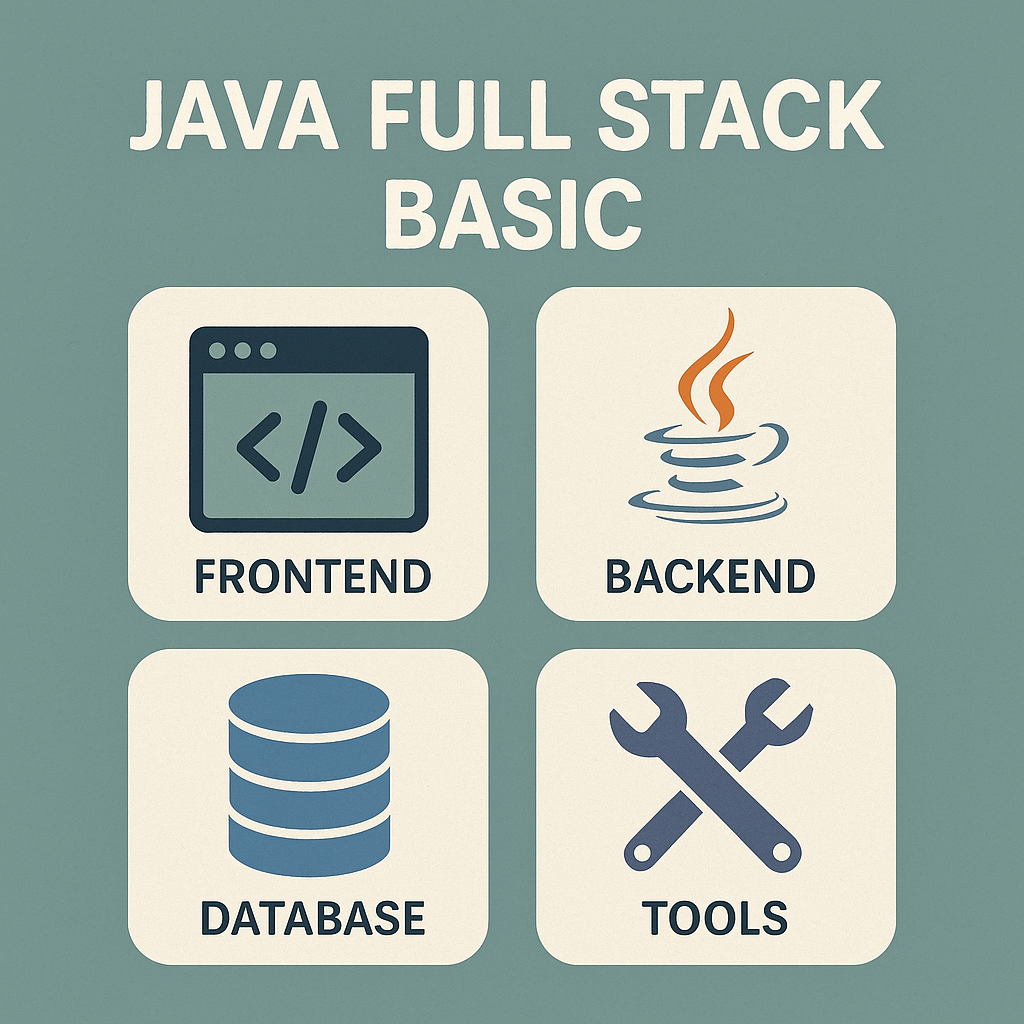
📚 Java Full Stack Development – Basic Course Outline
🧩 Module 1: Introduction to Full Stack Development
What is full stack development?
Frontend vs Backend vs Database
Tools and technologies used in Java full stack
💻 Module 2: Frontend Basics (HTML, CSS, JavaScript)
HTML5: Structure of web pages
CSS3: Styling, Flexbox, Grid
JavaScript Basics: Variables, functions, DOM, events
Introduction to Bootstrap for responsive design
⚛️ Module 3: Advanced Frontend (Optional for basic course)
Introduction to React.js or Angular
State, Props, Components (for React)
Form handling and API calls
☕ Module 4: Core Java (Backend Foundation)
Java basics: variables, data types, operators
OOP concepts: Class, Object, Inheritance, Polymorphism, Encapsulation
Exception handling, Collections framework
File handling and I/O streams
🖥️ Module 5: Java Backend Development
Java Servlets and JSP (Java EE basics)
Intro to Spring and Spring Boot
Creating REST APIs using Spring Boot
Dependency Injection
Annotations and Configurations
Intro to Maven for dependency management
🗃️ Module 6: Database Basics
SQL: CRUD operations, Joins, Constraints
MySQL or PostgreSQL
JDBC: Connecting Java to the database
Using JPA (Java Persistence API) with Spring Data
🔗 Module 7: Connecting Frontend and Backend
Making HTTP requests using JavaScript (Fetch/AXIOS)
Consuming REST APIs in frontend
Cross-Origin Resource Sharing (CORS) basics
🛠️ Module 8: Tools & Deployment
Git & GitHub: Version control basics
Using Postman for API testing
Build and run a basic full stack project
Introduction to deployment on Heroku or local servers
✅ Outcome of the Course
By the end, learners should be able to:
Build a simple web application with frontend, backend, and database
Understand how Java fits into full stack development
Be ready for intermediate-level topics (like microservices, security, cloud deployment)

Reviews
There are no reviews yet.